
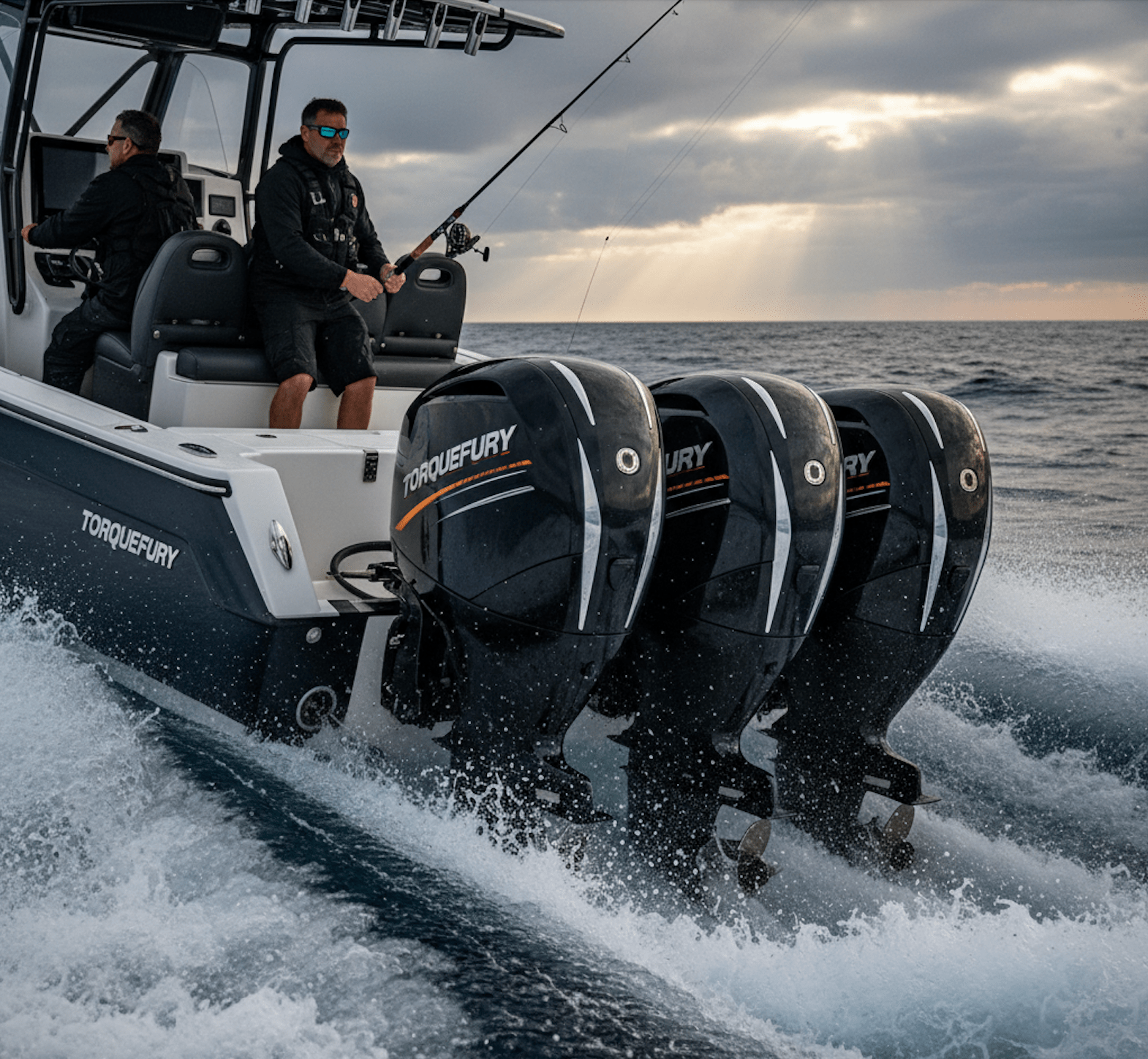
When shopping for a new outboard motor, the big number on the cowling—the horsepower (HP)—is usually the first thing that catches your eye. But what exactly does that number mean, and how does it translate into the actual performance you'll get on the water?
Understanding outboard horsepower goes deeper than just the number. It's about knowing where the power is measured and how it ultimately pushes your boat through the water. Let’s dive into the physics of power and the difference between " net " and "propeller shaft" horsepower.
What is Horsepower, Anyway?
In the simplest terms, horsepower (HP) is a unit of measurement for power, which is the rate at which work is done. The original definition, credited to James Watt, was the power required to lift 33,000 pounds one foot in one minute.
For your outboard motor, the horsepower rating signifies the engine's ability to produce rotational work. The greater the horsepower, the more potential power the motor has to overcome the resistance of the water and propel your boat.
The relationship between horsepower and engine performance is governed by a simple but critical formula:
HP=5252Torque×RPM
- Torque is the rotational force produced by the engine (the "push" or "twisting power").
- RPM is the engine's rotational speed (Revolutions Per Minute).
- The constant 5252 converts the units to horsepower.
This formula shows that power is a function of both how hard the engine twists (torque) and how fast it turns (RPM).
The Crucial Difference: Net vs. Propeller Shaft HP
Not all horsepower is created equal. The energy generated by the combustion in your engine has to travel through a number of components before it hits the water. Each component in the drive system—the crankshaft, gears, and shaft—causes a loss of power due to friction.
This is where the difference between two key measurements comes into play:
1. Brake Horsepower (BHP) / Net Horsepower
Brake Horsepower (BHP), often considered the "net" power in older terms, is the power output measured directly at the crankshaft or flywheel of the engine. This is the total power the engine block itself produces.
- Where it's measured: At the engine's output before the gear case.
- What it represents: The engine's raw, mechanical power before losses from the drivetrain.
2. Propeller Shaft Horsepower (SHP)
Propeller Shaft Horsepower (SHP) is the more relevant number for boaters, and it is the current standard for rating most outboard motors in the marine industry. This measurement is taken at the propeller shaft, right before the propeller itself.
- Where it's measured: At the output end of the propeller shaft (in the lower unit).
- What it represents: The actual power available to turn the propeller and generate thrust.
The key takeaway is this: Propeller Shaft HP is always lower than the engine's Net/Brake HP.
Why? Because the power must travel through the reduction gears and various bearings in the lower unit, which causes mechanical friction and heat—a loss of power. For most outboards, this mechanical loss typically ranges from 3% to 10% of the engine's total power.
Standardization Note: By the early 1980s, the marine industry largely shifted to rating outboards by Propeller Shaft HP to provide a more accurate and standardized rating that reflects the power delivered to the water. If you are comparing an older outboard to a new one, this difference in measurement standards can make a big difference!
The Final Step: Power Delivery and Boat Performance
The propeller shaft HP isn't the final word on your boat's speed. The SHP is simply the rotational power delivered to the prop. The propeller's job is to convert that rotational power into thrust—the forward push that moves your boat.
This conversion process is where the propeller's design dictates performance:
- Pitch: The "steepness" of the propeller blades. More pitch requires more power (and torque) to turn, but it can provide greater top-end speed. Less pitch is easier to turn, offering better hole shot and acceleration, but a lower top speed.
- Diameter and Blades: The size and number of blades on the prop affect the resistance in the water (propeller loading) and how efficiently the power is converted to thrust.
The ideal outboard, prop, and boat combination is one where the engine can reach its Maximum Rated RPM while turning the propeller. If the propeller is too large or has too much pitch (too much "load"), the engine will struggle to reach its peak RPM, and you will not achieve maximum boat speed or best performance.
From Power to Performance: The Flow of Energy
To summarize the journey of power in your outboard:
Engine Power (BHP)→Drivetrain Loss→Propeller Shaft Power (SHP)→Propeller Loss→Thrust (Boat Movement)
Ultimately, the number on the cowling, which is the Propeller Shaft HP, is the most reliable metric for comparing outboards, but savvy boaters know that fine-tuning the propeller is the final and most important step to truly harness that power for optimal performance on the water.
Explore all types of outboard motors here at alloutboards.com!
Subscribe to our newsletter and receive a selection of cool articles every weeks.
.png)
.png)
.png)
.png)

