
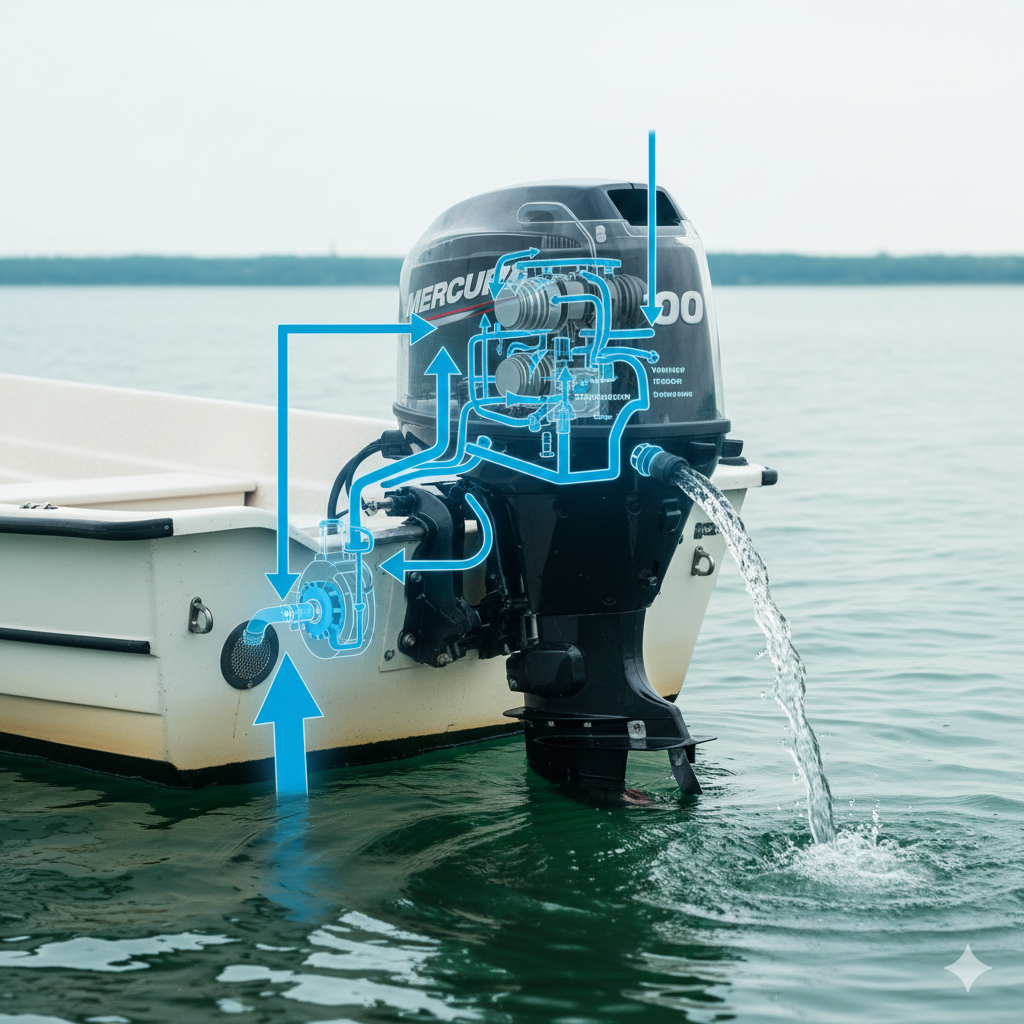
An outboard motor is a finely tuned machine, and like any internal combustion engine, it generates a tremendous amount of heat. Without a proper cooling system, that heat would quickly lead to catastrophic engine failure. Understanding how your outboard's cooling system works—and recognizing the signs of trouble—is the first step toward preventing a breakdown on the water.
The Basics of Outboard Cooling
Outboard motors use a raw water cooling system, meaning they draw water directly from the lake, river, or ocean they are running in to dissipate heat. This water is circulated through channels (water jackets) surrounding the cylinders before being expelled.
The system relies on three primary components to function correctly: the water pump, the thermostat, and the tell-tale.
1. The Water Pump (The Engine's Heart)
- Location: Typically housed in the lower unit, above the propeller.
- Function: This is the workhorse of the system. It sucks water in through intakes (screens) in the lower unit and forces it up through the drive shaft housing into the engine block.
- Key Component: The impeller. This is a flexible, rubber-like vane wheel that rotates on the drive shaft. As it spins within a specific housing (called the pump cup), the vanes flex and push water through the system.
- Why It Fails: The impeller is a wear item. Over time, the rubber stiffens, cracks, or the vanes wear down from friction. The most common cause of sudden pump failure, however, is running the motor out of water, which quickly burns up the dry rubber impeller.
2. The Thermostat (The Temperature Regulator)
- Location: Generally found on the powerhead near the top of the engine.
- Function: Its job is to ensure the engine runs at its optimal operating temperature. When the engine is cold, the thermostat remains closed, restricting water flow through the powerhead and allowing the engine to warm up quickly. Once the water reaches the correct temperature, the thermostat opens, allowing a full flow of cool water to regulate the temperature.
- Why It Fails: A thermostat can fail in two primary ways:
- Stuck Closed: Prevents water from circulating, leading to rapid overheating.
- Stuck Open: Causes the engine to run too cool, leading to poor fuel efficiency, excessive carbon buildup, and reduced performance.
3. The Tell-Tale (The "Pee Stream")
- Location: A small outlet port, usually on the side of the engine cowling.
- Function: This is a vital diagnostic feature. It expels a small, steady stream of cooling water that has been circulated through the system. It is a visual confirmation that the water pump is working and that water is successfully being drawn up into the motor.
- Why It Fails: The most common issue is a clog from salt, mineral deposits, or debris (like sand or mud), which blocks the narrow discharge hole. A weak stream or no stream at all is an immediate warning sign that the pump may be failing or the system is restricted.
Common Causes of Cooling System Failure
Understanding the components makes troubleshooting much easier. Most outboard cooling failures boil down to one of these issues:
- Impeller Wear:
- Cause: Age, dry running, or debris abrasion.
- Prevention & Fix: Replace the impeller and pump gaskets annually or bi-annually as part of preventative maintenance.
- Debris Clogs:
- Cause: Sucking up mud, sand, weeds, or shells through the lower unit intakes.
- Prevention & Fix: Always check the tell-tale stream after running in shallow or silty water. Backflush the system if the stream is weak.
- Corrosion and Salt Build-up:
- Cause: Running in saltwater without flushing; mineral deposits in freshwater.
- Prevention & Fix: Flush the motor with fresh water after every saltwater use. Consider using salt-removing flush solutions.
- Thermostat Failure:
- Cause: Age, corrosion, or being stuck by debris.
- Prevention & Fix: Test the thermostat by dropping it into heated water to see if it opens at the correct temperature. Replace if faulty.
- Internal Tube Failure (J-Tube or Grommets):
- Cause: The small internal rubber tube that connects the water pump outlet to the water tube leading to the powerhead can crack or degrade over time.
- Prevention & Fix: This requires lower unit removal and inspection, which should be done during a routine water pump service.
Overheating Prevention: Your Checklist
The damage from an overheated motor can cost thousands.
Follow this simple checklist for prevention:
- Check the Tell-Tale: Always look for a strong, steady stream immediately after starting the engine. If it’s weak or absent, shut the motor off!
- Regular Impeller Replacement: This is non-negotiable. Treat it as standard preventative maintenance, not a repair.
- Flush After Saltwater Use: Use "muffs" (flush attachments) to run fresh water through the system for 10-15 minutes after every saltwater trip.
- Watch the Warning Lights: Modern outboards have temperature and pressure warning lights/alarms. If one goes off, stop the engine immediately. Do not attempt to run it back to the dock.
Keeping your outboard cool ensures maximum performance and longevity, letting you spend more time enjoying the water and less time dealing with engine trouble.
Explore all types of outboard motors here at alloutboards.com!
Subscribe to our newsletter and receive a selection of cool articles every weeks.
.png)
.png)
.png)
.png)

